"Portland Dreams in Roses Red©"
Lyrics by M. S. McKenzie | Performed by The Horizon Seekers, Protected by Copyright

~ Associated State Links ~
"Portland Dreams in Roses Red"
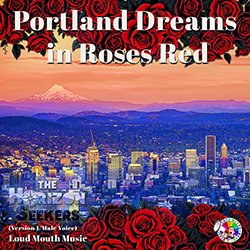
I wrote "Portland Dreams in Roses Red" as a straightforward love letter to the City of Roses, and I wanted the song to move the way an actual walk through Portland moves, from Pittock Mansion's misty woods down through Forest Park's green cathedrals to Council Crest at sunrise, the volcanic peaks of the Cascades always visible somewhere at the edge of the skyline.
The story behind the song is how much I let the ordinary, lived-in details carry the affection, bookshops and corner stores, rain-soaked streets and decorative doors, streetcar lines and freshly mowed lawns. I didn't want grand monuments to define this city. I wanted the small, specific textures that make Portland feel like an actual neighborhood rather than a postcard.
What I care about most is the phrase gateway to the gorge and great outdoors, because I wanted the song to capture something true about Portland's identity, a real city that still sits directly at the edge of genuine wilderness. Songs Across America has plenty of songs about cities defined purely by their skyline. This one is for a city that keeps its forests and rivers close enough to touch.
Warm, melodic indie-folk built on a gentle, singable chorus, structured as a walk through Portland's neighborhoods and surrounding natural landmarks.
Portland's blend of urban charm and nearby wilderness, small neighborhood details as civic identity, the city as gateway to the Columbia Gorge, and quiet, rain-soaked affection for home.
Primary Subject:
Portland, Oregon, from Pittock Mansion and Forest Park through downtown and Hawthorne Boulevard to the edge of the Columbia Gorge.
Mood:
Warm, cozy, and quietly affectionate throughout.
Some cities are defined less by their skyline than by how close they keep their wild places, and Portland's real character lives in that nearness, bookshops and rain-soaked streets sitting just a short drive from ancient forest and rushing river.
[Verse 1]
From Pittock Mansion's misty woods
Volcanic peaks break through the clouds
While bridges connect neighborhoods
And the mighty Willamette journeys on
Through Forest Park's green cathedrals
Where ancient fir trees sway
Past wild trails and urban tales
Where owls still rule the day
[Chorus]
Portland dreams in roses red
Between the rivers and the evergreens
Where bookshops and corner stores
Create the most picturesque scenes
Rain-soaked streets and decorative doors
And cozy roads all lined with trees
Gateway to the gorge and great outdoors
A lovely city for all to see
[Verse 2]
Up Council Crest at sunrise
The City of Roses wakes far below
While snowy peaks pierce horizon’s line
And meet the dawn’s golden glow
Past streetcar lines and vintage signss
Past lawns landscapers just mowed
Where gardens bloom in spring
And the mighty Columbia River flows
[Verse 3]
Down Hawthorne's quirky boulevard
Where food carts line the way
Through Powell's maze of stories told
Where bibliophiles love to stay
The Pearl gleams like a river stone
Worn smooth by time and rain
While cherry trees paint pink degrees
On spring's colorful refrain
[Verse 4]
Above the Rose Test Garden fair
Where pathways wind and weave
While Vista Bridge stands proud and tall
Through many a misty eve
The Gorge calls like a siren song
Where eagles ride the wind
And waterfalls tell tales to all
Where legends often begin
[Chorus]
Portland dreams in roses red
Between the rivers and the evergreens
Where bookshops and corner stores
Create the most picturesque scenes
Rain-soaked streets and decorative doors
And cozy roads all lined with trees
Gateway to the gorge and great outdoors
A lovely city for all to see
Here is a detailed description emphasizing the song’s affectionate portrait of Portland, its neighborhoods, literary culture, gardens, surrounding wilderness, and distinctive relationship with rain and greenery.
“Portland Dreams in Roses Red” is a warm, picturesque city song that celebrates Portland, Oregon, as a place where urban life, creative culture, neighborhood character, and the natural world exist side by side. Moving from Pittock Mansion and Forest Park to Council Crest, Hawthorne Boulevard, Powell’s Books, the Pearl District, the International Rose Test Garden, and the Columbia River Gorge, the song presents Portland as both a destination and a state of mind.
The title captures several of the city’s defining qualities. Portland has long been associated with roses, gardens, rain, creativity, and an almost dreamlike greenness. The phrase “dreams in roses red” turns the city into something alive and imaginative, as though Portland expresses its hopes through color, flowers, architecture, books, tree-lined streets, and the natural landscapes surrounding it.
The song is not built around a dramatic storyline. Instead, it unfolds as a musical tour through the city, gathering images that reveal Portland’s personality. Mist settles over wooded hills. Volcanic peaks appear between clouds. Bridges connect neighborhoods across the Willamette River. Independent shops and food carts bring life to the streets, while forests, gardens, waterfalls, and mountain views remain close enough to shape the city’s identity.
The first verse begins at Pittock Mansion, one of Portland’s most recognizable hillside viewpoints. The mansion’s location above the city allows the song to open with a wide perspective. Mist hangs among the surrounding woods, creating the damp, atmospheric quality associated with the Pacific Northwest.
From this elevated position, volcanic peaks rise through the cloud cover. Mount Hood is likely the most prominent presence, though on clear days the wider Cascade skyline may also become visible. The image of mountains breaking through the clouds makes Portland feel connected to a much larger landscape beyond its streets.
The clouds do not hide the mountains completely. Instead, they reveal them gradually, giving the skyline a shifting and almost cinematic quality. This is an effective way to introduce a city whose beauty often appears through rain, mist, filtered light, and changing weather rather than constant sunshine.
The bridges connecting neighborhoods introduce Portland’s urban geography. The Willamette River divides the city while the bridges bring its communities together. They are practical structures, but within the song they also symbolize connection between different neighborhoods, histories, and ways of life.
The Willamette is described as “mighty,” giving it a strong presence within the city. It is not merely a decorative riverfront feature. It has shaped Portland’s growth, industry, transportation, recreation, and relationship with the larger Columbia River system.
The verse then moves into Forest Park, whose extensive wooded landscape gives Portland one of its most unusual urban features. Calling its forested spaces “green cathedrals” presents the tall firs as natural columns and the canopy as a vaulted roof.
This cathedral metaphor suggests reverence without requiring a religious interpretation. The forest becomes a place of quiet, reflection, and humility within the boundaries of a major city.
The “ancient fir trees” swaying above the trails reinforce the impression that Portland’s urban life exists within a much older natural setting. Roads, houses, and bridges may be recent, but the region’s forests and river systems reach much further back in time.
“Past wild trails and urban tales” neatly summarizes Portland’s dual identity. A person can leave a city street and enter a wooded trail within a relatively short distance. The urban stories of neighborhoods, artists, workers, and travelers exist alongside the quieter stories of wildlife and forest ecology.
The line “Where owls still rule the day” adds a slightly playful and mysterious quality, although owls are generally most active at night or around dawn and dusk. Within the song, the phrase may be interpreted less literally as a way of saying that wildlife still holds authority within the forest.
A possible alternative would be “Where owls still rule the shade” or “Where owls still greet the day,” though the original line retains a memorable sense of wilderness surviving inside the city.
The chorus gathers Portland’s essential character into a colorful and welcoming portrait. The repeated title phrase creates an immediate sense of affection. Portland is not simply decorated with roses. It dreams through them.
“Between the rivers and the evergreens” places the city geographically and emotionally. Portland is shaped by the Willamette and Columbia rivers, while evergreen forests define the surrounding hills and regional landscape.
The bookshops and corner stores introduce Portland’s human scale. The city is admired not only for major landmarks but for smaller places where people browse, gather, work, and form neighborhood connections.
The line about creating “the most picturesque scenes” suggests streets that feel composed like photographs or paintings. Storefronts, trees, old houses, gardens, bicycles, cafés, and rain-darkened sidewalks create visual charm through their accumulated details.
The rain-soaked streets are not treated as gloomy. Rain becomes part of Portland’s atmosphere and visual identity. It darkens pavement, reflects signs and lights, nourishes gardens, and intensifies the greens of trees and moss.
Decorative doors and cozy roads lined with trees bring the city down to an intimate residential scale. Portland’s charm is found in individual homes, porches, gardens, and streets as much as in its skyline.
Calling Portland the “gateway to the gorge and great outdoors” broadens the song beyond the city itself. Portland provides access to the Columbia River Gorge, Mount Hood, forests, waterfalls, rivers, and a wide range of outdoor recreation.
The city’s appeal therefore comes partly from what surrounds it. Urban culture and wilderness are not presented as opposites. They support and enrich one another.
The final line, “A lovely city for all to see,” gives the chorus an inclusive and uncomplicated warmth. The song is not trying to argue that Portland is perfect. It is expressing sincere affection for the city’s beauty, personality, and setting.
The second verse moves to Council Crest at sunrise. As one of Portland’s highest public viewpoints, it provides another elevated perspective over the city and surrounding mountains.
“The City of Roses wakes far below” personifies Portland as a sleeping city gradually coming to life. Morning light spreads across neighborhoods, bridges, trees, and rooftops while the narrator watches from above.
The snowy peaks piercing the horizon continue the song’s relationship between city and volcano. The mountains appear both distant and commanding, creating a sense that Portland belongs to the Cascade landscape even when viewed from its most urban areas.
The golden glow of dawn softens the snow and cloud cover, transforming the mountains into part of the morning’s color palette. This scene reinforces the dreamy quality of the title.
Streetcar lines and vintage signs bring the verse back toward everyday city life. The streetcars suggest movement, history, and the continued importance of public transportation in Portland’s identity.
Vintage signs add nostalgia and character. They evoke older storefronts, neighborhoods, theaters, motels, restaurants, and businesses that preserve traces of earlier Portland.
The word “signss” contains a simple typographical error and should be corrected to “signs.”
The freshly mowed lawns present a more ordinary residential image. This is useful because it prevents the song from relying only on famous landmarks. Landscapers, homeowners, and neighborhood routines contribute to the city’s lived character.
Spring gardens then bring color and growth into the scene. Portland’s mild, wet climate supports abundant flowers, shrubs, trees, and carefully maintained gardens.
The Columbia River concludes the verse with a broader geographical movement. Although the Columbia does not pass through Portland’s central core in the same way as the Willamette, it defines the city’s northern edge and connects Portland with the Gorge, the interior Northwest, and the Pacific.
The second verse therefore moves from sunrise above the city down into streets, lawns, gardens, and rivers, creating a balanced portrait of the grand and ordinary.
The third verse focuses more directly on Portland’s creative and cultural character. Hawthorne Boulevard is introduced as quirky, immediately signaling individuality, independent businesses, alternative culture, and neighborhood energy.
Food carts lining the way represent one of the city’s most recognizable culinary traditions. They create informal gathering spaces and offer food influenced by many cultures, neighborhoods, and creative approaches.
The carts also suit the song’s affection for small-scale city life. They are accessible, social, and closely connected to the street rather than separated within formal dining spaces.
Powell’s Books becomes a maze of stories, reflecting both the physical scale of the bookstore and the seemingly endless worlds contained within its shelves.
The word “maze” suggests exploration without a fixed destination. Visitors may enter searching for one title and become lost among subjects, rooms, editions, and unexpected discoveries.
“Where bibliophiles love to stay” gives the lyric a lighthearted literary quality. Portland is portrayed as a city where readers are not merely consumers but part of the local identity.
The Pearl District then “gleams like a river stone.” This is a fitting comparison because the neighborhood has been shaped and polished through redevelopment, time, weather, and changing use.
A river stone becomes smooth through repeated contact with water. In a similar way, the Pearl has evolved from an industrial and warehouse district into an area known for galleries, residences, shops, restaurants, and urban design.
The phrase “worn smooth by time and rain” strengthens this transformation. Rain once again becomes an active force shaping the emotional and visual character of Portland.
Cherry trees “paint pink degrees” across the city during spring. The wording is imaginative, suggesting gradually increasing shades or layers of pink.
The blossoms turn streets and waterfront areas into temporary displays of color, creating a seasonal counterpart to the roses celebrated throughout the song.
“On spring’s colorful refrain” treats the blooming trees as part of a recurring annual song. Spring returns with similar colors each year, but each season feels newly composed.
The fourth verse moves toward the International Rose Test Garden, one of the clearest expressions of Portland’s identity as the City of Roses.
The pathways winding and weaving through the garden reflect both its physical layout and the song’s broader structure. The listener has been wandering through Portland rather than following a rigid route.
The garden itself represents cultivation, experimentation, fragrance, color, and public beauty. Roses are not merely decorative symbols but living forms cared for through seasons and generations.
Vista Bridge introduces another architectural landmark connected with Portland’s hills and older neighborhoods. Standing above the surrounding landscape, it contributes a graceful human-made structure to a song largely shaped by natural imagery.
The bridge standing through “many a misty eve” reinforces Portland’s rain-softened atmosphere. Mist obscures hard edges and creates the visual feeling of a remembered or imagined city.
The Columbia River Gorge then calls like a siren song. Earlier, the casino machines in “Neon Playground” used the siren metaphor as a warning, but here the call is more restorative.
The Gorge draws people away from the city toward cliffs, trails, forests, waterfalls, and river views. Its beauty is difficult to resist.
Eagles riding the wind give the Gorge a sense of freedom and elevation. Their flight reflects the powerful air currents moving through the river corridor and across its high cliffs.
The waterfalls “tell tales to all,” continuing a theme used in many landscape songs: water as a carrier of memory and story.
These tales may include geology, Indigenous history, exploration, settlement, travel, fire, floods, and the experiences of countless visitors.
The line “Where legends often begin” gives the Gorge a mythic role. It is a place where natural grandeur inspires stories larger than ordinary life.
The final chorus returns to Portland with all of these settings now gathered behind it. The city is no longer only a collection of streets and buildings. It is understood through its relationship with forests, gardens, rivers, mountains, books, neighborhoods, and the Gorge.
Musically, “Portland Dreams in Roses Red” would work well as a bright but gentle folk-pop, adult contemporary, or melodic soft-rock song. Its sound should feel colorful, affectionate, and slightly nostalgic.
The arrangement could begin with acoustic guitar or warm electric piano, joined by a clean electric guitar phrase that suggests mist and morning light. Light percussion and melodic bass would create relaxed forward movement.
The first verse should remain spacious enough for the scenic details to register. Subtle strings or violin could enter beneath the view from Pittock Mansion and the Forest Park imagery.
The chorus should widen through layered harmony vocals, fuller drums, and a memorable melodic lift on “Portland dreams in roses red.” The phrase is naturally suited to a broad, singable hook.
The words “between the rivers and the evergreens” could be supported by sustained harmonies that create a sense of geographic openness.
The second verse could introduce piano and light chimes to suggest sunrise from Council Crest. A gentle streetcar-like rhythmic pulse might subtly accompany the urban details.
The Hawthorne and Powell’s verse could become slightly more playful, with acoustic strumming, brushed drums, organ, or a melodic saxophone phrase reflecting the neighborhood’s quirky and creative energy.
The fourth verse should build gently toward the Gorge. Strings or electric guitar could rise beneath the siren-song image, while cymbal swells suggest wind and waterfalls.
The final chorus could use fuller vocal harmonies and a more expansive instrumental arrangement, but it should retain a welcoming, human-scale quality. Portland’s charm in the song comes from warmth rather than grandeur alone.
An instrumental outro might combine the chorus melody with soft rain ambience, distant city sounds, or a slowly fading electric-piano phrase. The ending could leave the listener with the impression of lights reflecting across wet streets beneath surrounding trees.
At its heart, “Portland Dreams in Roses Red” is a love letter to a city where nature remains visible within daily urban life. Rivers pass through and beside it, forests reach into its hills, gardens brighten its neighborhoods, and snow-covered volcanoes rise beyond its skyline.
The song recognizes that Portland’s identity is not created by one landmark or reputation. It comes from the interaction of many smaller elements: bookshops, food carts, decorative doors, bridges, old signs, streetcars, trails, gardens, trees, and rain.
Its use of red roses is especially meaningful. Roses are beautiful but require care. They bloom brilliantly, then fade, and return again with the seasons. In that sense, they symbolize a city that changes while maintaining a recognizable spirit.
The song also portrays Portland as a gateway. It offers culture and neighborhood life while providing access to some of the Pacific Northwest’s most dramatic outdoor landscapes.
“Portland Dreams in Roses Red” is therefore both an urban portrait and a regional song. It celebrates a city shaped by the meeting of human creativity and natural abundance.
Its deepest message is that a city can remain beautiful not by separating itself from nature, but by allowing rivers, trees, gardens, weather, wildlife, and mountain horizons to remain part of its everyday story. In Portland, those elements come together beneath the rain, creating a city that seems to dream in evergreens, mist, books, bridges, and roses red.









.jpg)
