"Oh Oregon, You're Calling Me©"
Lyrics by M. S. McKenzie | Performed by The Horizon Seekers, Protected by Copyright

~ Associated State Links ~
"Oh Oregon You’re Calling Me"
I wrote "Oh Oregon, You're Calling Me" as a coast-to-valley tribute, moving from Astoria down to Brookings Bay along the Pacific before turning inland to the Willamette Valley's wineries and farmland. I wanted the whole state to feel connected by that single journey, sea stacks and Sitka spruce giving way to green valley towns without ever losing the throughline of one continuous call.
The story behind the song is the specific phrase your waters pure, your forests deep, these sacred lands we need to keep, because I wanted this to be more than admiration. Oregon's coastline and forests are treated in this song as something actively worth protecting, not simply beautiful scenery passing by the window.
What I care about most is how the chorus keeps returning, unchanged, after each new stretch of landscape, because I wanted that repetition to feel like an actual calling, the same invitation renewing itself at the coast, in the valley, and everywhere in between. Songs Across America has plenty of state songs that move through a checklist of landmarks. This one is built around a single repeated plea that never gets tired of saying itself.
Warm, anthemic folk-rock built on a repeating, invitational chorus, structured as a journey from the Pacific coast inland through the Willamette Valley.
Oregon's coast-to-valley geography as one continuous calling, conservation as an active plea rather than passive praise, the Willamette Valley's farmland and wine country, and Pacific coastline as sacred trust.
Primary Subject:
Oregon in full, from Astoria and the Pacific coastline through the Willamette Valley to Eugene and Salem.
Mood:
Warm, inviting, and quietly protective throughout.
Some places don't just deserve to be admired, they deserve active protection, and a state's true calling can be heard the same way at its coastline, its valleys, and everywhere in between.
[Verse 1]
From Astoria down to Brookings Bay
Where sea stacks rise through ocean spray
Haystack Rock stands sentinel guard
While tides reshape the coastal yard
Pacific winds through Sitka spruce
At Cape Lookout, where seals recline
Ancient forests meet the sea
This wild coast runs so wild and free
[Chorus]
Oh Oregon, you're calling me
From mountain peaks to rolling sea
Your waters pure, your forests deep
These sacred lands we need to keep
From desert sage to cedar tree
Oh Oregon, you're calling me
[Verse 2]
The Valley stretches green and wide
Where wineries dot the countryside
From Portland down to Eugene's heart
Where farms and fields stretch out so far
The Willamette flows on down
Past Salem's shores, each river town
While ospreys soar on thermal streams
Above these fields of hopeful dreams
[Chorus]
Oh Oregon, you're calling me
From mountain peaks to rolling sea
Your waters pure, your forests deep
These sacred lands we need to keep
From desert sage to cedar tree
Oh Oregon, you're calling me
[Verse 3]
Hood and Jefferson pierce the sky
While Three Sisters watch time go by
Crater Lake's deep waters hold
Ten thousand years of stories told
Through McKenzie's rushing sound
Where ancient trees touch hallowed ground
These peaks of white watch over all
From spring until the autumn fall
[Chorus]
Oh Oregon, you're calling me
From mountain peaks to rolling sea
Your waters pure, your forests deep
These sacred lands we need to keep
From desert sage to cedar tree
Oh Oregon, you're calling me
[Verse 4]
Past Bend where high desert calls
Through Painted Hills' weathered walls
The Grande Ronde flows wild and clear
While golden eagles circle near
Steens Mountain rises proud and tall
Above the sage and waterfall
The Wallowas touch heaven's door
In this land I can't ignore
[Chorus]
Oh Oregon, you're calling me
From mountain peaks to rolling sea
Your waters pure, your forests deep
These sacred lands we need to keep
From desert sage to cedar tree
Oh Oregon, you're calling me
“Oh Oregon, You’re Calling Me” is a broad, uplifting tribute to the remarkable geographic diversity of Oregon. Traveling from the rugged Pacific coast through the fertile Willamette Valley, across the snowcapped Cascade Range, and into the high deserts and remote mountains of eastern Oregon, the song presents the state as a place of beauty, freedom, abundance, and deep emotional belonging.
The repeated phrase “Oh Oregon, you’re calling me” gives the song the feeling of both a homecoming anthem and a traveler’s invitation. Oregon is not portrayed merely as a collection of scenic destinations. Its coastlines, rivers, forests, mountains, farms, deserts, and wildlife seem to possess a voice of their own, drawing the narrator toward a land that feels restorative, meaningful, and impossible to ignore.
The song’s emotional power comes from the way it combines admiration with responsibility. The chorus celebrates Oregon’s pure waters and deep forests, but it also declares that these are “sacred lands we need to keep.” Beauty is therefore not treated as something to consume and leave behind. It becomes an inheritance that should be respected, protected, and passed on.
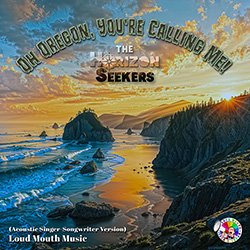
The first verse begins on the Oregon Coast, following the shoreline from Astoria in the north toward Brookings in the far south. This sweeping opening immediately establishes the song’s sense of movement. The listener is invited to travel the entire length of the state’s coastline, passing sea stacks, forests, cliffs, beaches, headlands, and wind-swept communities.
The sea stacks rising through ocean spray capture one of the most recognizable features of the Oregon Coast. These isolated towers of rock stand offshore as remnants of cliffs gradually reshaped by waves, wind, and erosion. Their presence gives the coastline a dramatic and almost timeless appearance.
Haystack Rock is described as a sentinel standing guard. The image gives the formation a protective personality, as though it has watched over the beach and surrounding waters through generations of storms, changing tides, and human visitors. Its height and solitary shape make it appear less like a simple rock formation and more like a landmark with its own identity.
The line about tides reshaping the coastal yard emphasizes that the shore is never truly fixed. Each tide moves sand, reveals pools, carries driftwood, and alters the meeting place between ocean and land. The phrase “coastal yard” gives the immense shoreline an intimate quality, suggesting that the coast is Oregon’s own natural front porch.
Pacific winds moving through Sitka spruce add sound and motion to the scene. These coastal forests endure salt air, heavy rain, strong winds, and mist, often growing into unusual shapes under the pressure of the ocean climate. The trees form a transition between the open sea and the deeper forests inland.
Cape Lookout introduces a high coastal viewpoint where forested headlands extend into the Pacific. The seals resting nearby contribute a peaceful wildlife image, reminding the listener that the coastline is not merely scenic but part of a living marine ecosystem.
The statement “Ancient forests meet the sea” summarizes the distinctive character of western Oregon. Few landscapes combine temperate rainforest, towering trees, rocky beaches, steep cliffs, and open ocean so dramatically. The coast becomes a meeting place between separate natural worlds.
The final line of the verse repeats the idea of wildness and freedom. Although “This wild coast runs so wild and free” contains a deliberate repetition of “wild,” that repetition reinforces the untamed character of the shoreline. A smoother alternative could be “This rugged coast runs wild and free,” though the original also has an emphatic, anthem-like quality.
The chorus expands from the coast to the entire state. Oregon calls from mountain peaks and the rolling sea, creating a musical panorama that stretches from high elevation to ocean level.
“Your waters pure, your forests deep” identifies two of the state’s defining natural resources. Rivers, lakes, waterfalls, wetlands, snowfields, and coastal waters are connected to dense forests that support wildlife, store water, protect soil, and shape Oregon’s identity.
Calling the lands sacred expresses reverence without requiring a particular religious interpretation. The word suggests that these places possess value beyond development, recreation, or economic use. They deserve protection because they are ecologically important, culturally meaningful, and capable of inspiring wonder.
The final chorus image, “from desert sage to cedar tree,” captures the remarkable environmental range of Oregon. The state is often associated primarily with rain and evergreen forests, but much of its interior is dry, open, and dominated by sagebrush country. The lyric reminds the listener that Oregon contains many different worlds.
The second verse enters the Willamette Valley, one of Oregon’s most fertile and populated regions. Its broad green landscape creates a gentler contrast with the rocky coast. Farms, vineyards, river towns, and cities become part of the song’s portrait without overwhelming the natural setting.
The wineries scattered across the countryside reflect the valley’s agricultural richness and its reputation for wine production. Vineyards arranged across rolling hills create a cultivated beauty shaped through the relationship between climate, soil, and human work.
The route from Portland toward Eugene traces one of the state’s major population corridors. The song acknowledges Oregon’s cities, but it places them within a larger landscape of fields, farms, rivers, and open country.
Portland and Eugene represent different expressions of Oregon’s urban culture, while Salem introduces the state capital along the river. These cities are not presented as interruptions in the natural journey. They are communities shaped by the valley and connected by water, transportation, agriculture, and history.
The Willamette River becomes the central thread of the verse. Flowing through the valley and past numerous towns, it connects rural and urban Oregon. Its presence has influenced settlement, trade, farming, transportation, wildlife habitat, and regional identity.
The wording “The Willamette flows on down” gives the river an easy, musical movement. The following reference to Salem and other river towns makes the waterway feel like a companion traveling through the heart of the state.
Ospreys riding thermal currents bring wildlife back into the cultivated landscape. Their presence suggests that farms, rivers, towns, and animal habitats can exist within the same broad region, though maintaining that balance requires care.
The “fields of hopeful dreams” may represent the aspirations of farmers, families, winemakers, communities, and people beginning new lives in Oregon. Agriculture always involves hope because each season depends upon weather, soil, water, labor, and patience.
The second chorus now reflects not only wild nature but also the landscapes people call home and work within. The call of Oregon includes both remote wilderness and lived-in valleys.
The third verse moves eastward and upward into the Cascade Range. Mount Hood, Mount Jefferson, and the Three Sisters rise as defining features of Oregon’s skyline. These volcanic peaks appear to stand watch over the state, visible across great distances.
Mount Hood and Mount Jefferson “pierce the sky,” emphasizing their height and sharp visual presence. The Three Sisters, by contrast, “watch time go by,” giving the grouped peaks a calm and enduring personality.
The mountains become witnesses to seasons, settlement, fire, snow, migration, and changing generations. Their apparent permanence contrasts with the brief span of human life.
Crater Lake introduces one of Oregon’s most extraordinary natural wonders. Its deep blue water occupies the caldera formed by the collapse of an ancient volcano. The line about holding ten thousand years of stories gives the lake a role as a keeper of geological and human memory.
The lake’s still surface may seem timeless, yet it is the result of dramatic volcanic change. This creates a recurring theme within the song: landscapes that appear peaceful often contain histories of fire, ice, erosion, and upheaval.
The reference to the McKenzie likely points toward the McKenzie River and its rushing waters through the western Cascades. The river’s sound adds movement beneath the still volcanic peaks.
The name also gives the song a subtle personal connection because it shares the songwriter’s family name. Whether intentional or incidental, the reference creates the feeling that the narrator’s identity is woven into the Oregon landscape.
Ancient trees touching “hallowed ground” reinforce the conservation message. Old-growth forests are presented as living monuments rather than simply collections of timber. Their age, scale, and ecological importance give the forest a cathedral-like quality.
The snow-covered peaks watching over the state from spring into autumn emphasize the seasonal endurance of the high country. Snowfields remain visible long after lower elevations have warmed, feeding rivers and affecting ecosystems far below.
The phrase “from spring until the autumn fall” uses “fall” both as the season and as a sense of descent. A smoother alternative might be “From spring until the colors fall” or “From spring until the autumn calls,” but the original meaning remains clear.
The third chorus now gathers the coast, valley, rivers, forests, and Cascade peaks into one expanding image of Oregon. The song is becoming a complete geographical journey rather than a series of separate scenes.
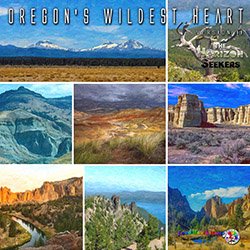
The fourth verse enters central and eastern Oregon, revealing the part of the state less familiar to many visitors. Past Bend, the lush forests gradually give way to high desert, lava country, sagebrush plains, and distant mountain ranges.
The line “where high desert calls” mirrors the larger chorus. Even within Oregon, different landscapes issue different invitations. The coast calls through wind and surf, while the desert calls through silence, space, dry air, and distant horizons.
The Painted Hills introduce a landscape of colored layers shaped by ancient climates and sediments. Their weathered walls appear like a natural canvas, containing reds, golds, blacks, and muted greens.
These hills provide a visual contrast with Oregon’s evergreen forests and blue waterways. They show that the state’s beauty is not limited to lushness. Dry and eroded landscapes can be equally rich in color, history, and meaning.
The Grande Ronde River carries the song farther into northeastern Oregon. Its wild and clear waters move through forests, valleys, and canyon country, supporting fish, wildlife, and human communities.
Golden eagles circling above reinforce the openness and elevation of the region. Their wide flight paths suit the scale of eastern Oregon, where the horizon can feel almost limitless.
Steens Mountain then rises from the desert of southeastern Oregon. Its long escarpment stands dramatically above the surrounding sage country and valleys, creating one of the state’s most impressive remote landscapes.
The mention of waterfalls beneath Steens Mountain reflects the surprising presence of water in high-desert terrain. Snowmelt and mountain streams create green corridors and dramatic falls within an otherwise dry region.
The Wallowa Mountains bring the journey toward northeastern Oregon and provide a final image of alpine grandeur. Their peaks are described as touching “heaven’s door,” giving them a majestic and almost spiritual quality.
The Wallowas are sometimes compared visually with larger Western mountain ranges because of their rugged summits, glacial valleys, lakes, and high meadows. Within the song, they become the final proof that Oregon cannot be contained within a single image.
“In this land I can’t ignore” gives the fourth verse its emotional resolution. The state’s call has become too powerful to dismiss. What began as admiration has become an inward pull toward belonging, return, or deeper exploration.
The final chorus brings the full journey together. The listener has traveled from the Pacific coastline through the Willamette Valley, crossed the Cascade volcanoes, and entered the high deserts and mountain ranges of the east.
The repeated title line now feels like an answer as much as a call. Oregon has been calling throughout the song, and the narrator is ready to listen.
Musically, “Oh Oregon, You’re Calling Me” would work especially well as an expansive folk-rock, country-rock, or Americana anthem. Its arrangement should feel open, melodic, and emotionally uplifting, with enough warmth to convey affection and enough scale to match the state’s varied landscapes.
The song could begin with acoustic guitar, mandolin, or soft piano, accompanied by a light rhythm that suggests movement down a coastal highway. A clean electric guitar with gentle reverb could evoke Pacific wind and open space.
The first verse might remain relatively restrained, allowing the coastal imagery to establish the scene. Subtle strings or fiddle could rise beneath the reference to ancient forests meeting the sea.
The chorus should widen significantly through stronger drums, bass, harmony vocals, and sustained guitar or strings. The phrase “Oh Oregon, you’re calling me” has the potential to become a strong communal hook.
Layered harmony vocals could enter on “from mountain peaks to rolling sea,” creating the sense of the state answering from many directions. The final line of each chorus should feel like an open invitation rather than a dramatic conclusion.
The second verse could introduce warmer acoustic textures to reflect farmland, vineyards, and the flowing Willamette. Piano or mandolin might add a gentle pastoral quality.
The third verse should gain greater elevation and grandeur. Strings, tom drums, and electric guitar could build beneath the Cascade peaks and Crater Lake imagery.
The fourth verse could introduce a more spacious Western sound to match the high desert. Harmonica, fiddle, or lightly twanging guitar could suggest open country without becoming overly traditional or heavily country-styled.
The final chorus should be the largest section of the song, with full-band instrumentation and layered voices. A repeated final “Oh Oregon, you’re calling me” could extend into the outro, supported by a rising instrumental melody.
At its heart, “Oh Oregon, You’re Calling Me” is a love song to an entire state. It celebrates not one famous destination but the connections between coast, valley, mountain, river, forest, desert, farmland, wildlife, and community.
The song recognizes that Oregon’s identity comes from contrast. Rain-soaked forests exist alongside dry sagebrush plains. Volcanic peaks rise above green valleys. Ocean waves meet ancient spruce, while desert mountains hold waterfalls and alpine basins.
It also emphasizes that the landscapes people love require stewardship. The chorus does not merely admire Oregon’s natural beauty. It asks listeners to help keep its waters pure, forests deep, and wild lands protected.
The word “calling” suggests that the relationship between people and place is active. Oregon reaches toward the narrator through memory, beauty, sound, and longing. Its rivers, mountains, coastlines, and forests seem to invite a return to something more grounded and enduring.
“Oh Oregon, You’re Calling Me” is therefore both a travel anthem and a conservation song. It encourages listeners to explore the state while remembering that its greatest treasures cannot be replaced once lost.
Its final message is one of belonging. Whether the narrator is an Oregonian returning home, a former resident remembering the state, or a traveler who feels unexpectedly connected to it, the call is unmistakable. From the Pacific surf to the Wallowa Mountains, Oregon has entered the heart and refuses to be ignored.









.jpg)
