"Love is in The Mountain Air©"
Lyrics by M.S. McKenzie | Performed by American Storyteller Music | Protected by Copyright

~ Associated Colorado State Links ~
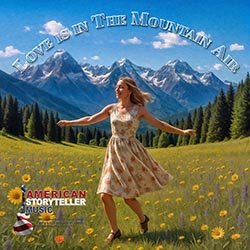
I wrote "Love is in the Mountain Air" as an uncomplicated love song set against the full sweep of Colorado, because sometimes the best thing a song can do is simply follow two happy people from Boulder to Telluride and let the mountains do the romantic heavy lifting. Sunrise paints the Maroon Bells in pink and golden light, we're wrapped up close in Breckenridge, your hand in mine so right, and I wanted every landmark to double as a memory the couple is making together.
The story behind the song is how much geography I packed into it on purpose, Aspen nights, Denver's lights, Echo Lake, Garden of the Gods, Pikes Peak, Durango, Steamboat Springs. I wanted the whole state to feel like it belonged to this one relationship, every ridge and canyon curve holding a piece of their story rather than just being scenery they happened to drive past.
What I care about most is the bridge's promise, let the snow fall, let the wild winds blow, we're warm inside this afterglow, because I wanted the love in this song to feel sturdier than the weather, an actual shelter rather than something the mountains merely decorate. Songs Across America has plenty of songs about landscapes changing people. This one is simpler and just as true, a landscape making an already good love feel even more like home.
Warm, uplifting country-pop built on a bright, singable chorus, structured as a romantic tour through Colorado's mountain towns and landmarks.
Uncomplicated romantic love, Colorado's mountain landscape as a backdrop for shared memory, warmth found together against wild weather, and home found in a person rather than a place.
Primary Subject:
A couple in love traveling across Colorado, from Boulder and Aspen to Breckenridge, Colorado Springs, and Durango.
Mood:
Warm, joyful, and tenderly romantic throughout.
Sometimes love doesn't need complication or crisis to be worth a song. A relationship secure enough to feel like home in any weather, set against a landscape as vast as Colorado, is its own complete and worthy story.
[Verse 1]
Love is in the mountain air, I feel it on the breeze
From Boulder down to Telluride, it’s dancing through the trees
In Aspen nights and Denver’s lights, your smile is all I see
Hearts are high like peaks above, you're everything to me
[Chorus]
Love is in the mountain air, it’s spinning ‘round like the stars
Floating over silver lakes and winding through the cars
On Trail Ridge Road, we drive so slow, don’t wanna miss a beat
When I’m with you, Colorado feels like paradise complete
Love is in the mountain air : oh yeah, it’s everywhere
Love is in the mountain air : you and me, we’re there
[Verse 2]
Sunrise paints the Maroon Bells in pink and golden light
We’re wrapped up close in Breckenridge, your hand in mine so right
Echo Lake reflects your eyes, as blue as alpine skies
No need for words up here with you:this love just amplifies
[Verse 3]
We kissed beneath the red rock towers, Garden of the Gods
Then chased the clouds on Pikes Peak’s crown, in awe of where we was
Colorado Springs at golden hour, your laughter filled the air
In every ridge and canyon curve, I find you everywhere
[Bridge]
Let the snow fall, let the wild winds blow
We’re warm inside this afterglow
From Durango down to Steamboat Springs
You're my home in everything
[Chorus - Repeat]
Love is in the mountain air, singing through the pines
Dancing down the ski slopes, tracing all the lines
Through canyon walls and waterfalls, I hear your laugh again
You're the rhythm of the Rockies, my lover and my friend
Love is in the mountain air : oh yeah, it’s everywhere
Love is in the mountain air : you and me, we’re there
[Outro]
So if you ever wonder where
My heart will always be:
It’s riding high with you and me
In Colorado’s melody...
Love is in the mountain air...
Love is in the mountain air...
Love is in the mountain air...
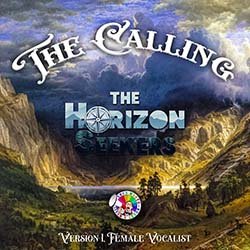
"The Calling" is an expansive country-rock and Americana tribute to Colorado's Rocky Mountains, historic mining towns, alpine highways, river valleys, national parks, canyon country, and high-desert landmarks. More than a simple catalog of scenic destinations, the song follows a traveler who feels emotionally summoned by the landscape. The mountains do not merely impress him. They awaken a desire for change, movement, freedom, and a more meaningful way of life.
The title captures the song's central emotional force. "The Calling" refers to the almost irresistible pull of the Rockies upon the narrator's imagination. Their peaks, forests, wildflowers, rivers, roads, and open skies seem to speak directly to him. The call is partly an invitation to travel, but it is also an inward summons. The narrator senses that the life he has been living is no longer enough and that the mountains may offer the clarity needed to begin again.
The recurring line "my heart aches for change" gives the song greater depth than a conventional tourism anthem. The narrator is not simply enjoying a vacation. He is restless, searching, and perhaps dissatisfied with the direction of his life. The Rockies represent possibility because they rise above familiar routines and reveal a wider horizon.
The first verse opens in the Yampa River Valley and moves toward Pikes Peak, immediately giving the song a broad geographic scale. The Yampa evokes northwestern Colorado's river country, open valleys, canyon landscapes, and less-developed spaces, while Pikes Peak represents one of the state's most recognizable mountain landmarks.
By connecting these distant regions, the song suggests that the call of the Rockies can be felt across the entire state. It does not come from one isolated summit but from a vast interconnected landscape of rivers, ranges, valleys, forests, and high plains.
The description of the Colorado Rockies as "a sight that all should seek" turns the song outward toward the listener. The narrator believes these landscapes possess a universal value. They should be experienced not merely because they are beautiful but because they can alter perspective and awaken something that ordinary surroundings may leave dormant.
Aspen leaves glowing in the morning sun introduce warmth, color, and movement. Their trembling leaves catch light differently with each passing breeze, making the trees appear almost illuminated from within.
The phrase "cleansing light" suggests renewal. Morning does more than reveal the landscape. It washes away fatigue, confusion, and emotional heaviness. The narrator's adventure begins under that light, reinforcing the sense that the journey may become a new chapter in his life.
"This land of rugged beauty" recognizes that Colorado's appeal comes partly from difficulty. The mountains are steep, weather changes quickly, roads climb through exposed terrain, and high elevations demand effort. Their beauty is not soft or easily possessed.
The first chorus opens into the scale of the Rocky Mountains. They are "wide and high," stretching across distance while rising dramatically above the valleys. This combination of horizontal and vertical immensity creates a sense of freedom.
Columbines and eagles provide two of Colorado's most recognizable natural symbols. The columbine represents delicate alpine beauty, while the eagle represents strength, height, and independence.
Their placement within the same line balances fragility and power. Wildflowers bloom briefly in high meadows, while eagles ride mountain winds across enormous territories. Together, they express different forms of life adapted to the Rockies.
The journey from the Continental Divide to the San Juan Range expands the chorus across some of Colorado's most important mountain geography. The Continental Divide functions as both a physical watershed and a symbolic line of decision.
Water falling on opposite sides of the Divide travels toward different oceans and river systems. Within the song, the Divide can also represent a turning point in the narrator's life. He has reached a place where continuing in the old direction may no longer be possible.
The San Juan Mountains bring a particularly rugged and colorful character to the chorus. Their steep slopes, volcanic geology, mining history, alpine basins, and dramatic roads embody the adventurous spirit the narrator seeks.
"The Rockies are callin'" personifies the entire mountain system. The call may be carried through wind, birdsong, rivers, distant thunder, or the sight of summits against the sky.
The narrator's aching heart suggests that he has heard this call before. It may represent a long-standing dream repeatedly postponed by work, fear, obligation, or uncertainty.
The second verse moves into the historical Colorado Rockies. Leadville stands beneath Mount Elbert, joining the state's highest summit with one of its most storied mining towns.
Mount Elbert represents natural elevation, while Leadville represents human ambition. Miners entered these mountains seeking silver and wealth, risking their health and lives in difficult conditions.
The line about miners searching with "all their strength and will" presents them as determined figures driven by hope and necessity. Their efforts helped shape Colorado's development, though the boom-and-bust economy also brought hardship, dangerous labor, environmental consequences, and abandoned dreams.
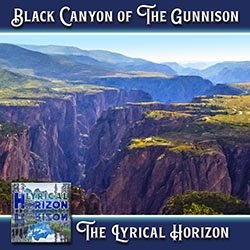
The verse then travels toward Gunnison and the Black Canyon. The river's persistent movement through dark metamorphic rock introduces a much deeper timescale than the mining era.
The reference to gneiss and schist gives the lyric unusual geological specificity. These ancient rocks contribute to the canyon's dark, severe appearance and remind the listener that Colorado's history began long before towns, roads, or mines.
The waters are described as tireless. The river continues its work without concern for human schedules, gradually deepening and reshaping the canyon.
This creates a recurring contrast within the song: human beings pursue change quickly, while the landscape changes through persistence across enormous periods of time.
The second chorus now carries both natural and historical weight. The narrator has seen not only mountain beauty but evidence of human ambition and geological endurance.
The desire for change becomes more complex. He may be drawn toward adventure, but the land also teaches him that meaningful transformation requires effort and patience.
The third verse follows scenic roads and alpine destinations. The "windin' roads of Lariat" likely refers to the Lariat Loop and mountain roads west of Denver, where switchbacks, foothill views, and historic routes offer an introduction to the high country.
The winding road becomes a metaphor for the journey itself. The narrator does not travel along a straight or predictable path. Each curve reveals another possibility.
Crested Butte appears through its wildflowers, giving the verse a bright alpine character. The town and surrounding valleys are associated with colorful summer meadows and dramatic mountain scenery.
The word "Beaute" appears to be a spelling error and would be corrected to "Butte."
The Maroon Bells rise near Aspen as "lofty giants," standing with resolve above lakes, forests, and valleys. Their distinctive shape and reflected image give them an almost mythic presence.
Describing them as resolute suggests endurance. They withstand snow, wind, erosion, and seasonal change while continuing to dominate the horizon.
Rocky Mountain National Park introduces wildlife and high-elevation ecology. The bugling of elk brings sound into the song and gives the mountain autumn or late-summer atmosphere an almost haunting emotional quality.
An elk's call carries across valleys and meadows, transforming the landscape into a natural amphitheater. Within the song, it may also echo the larger "calling" of the Rockies.
The high tundra displaying its colors brings attention to a fragile environment above the tree line. Wildflowers, grasses, lichens, and low-growing plants survive short summers, intense sunlight, freezing temperatures, and powerful winds.
The long summer days create a sense of openness and abundance. The narrator can remain on the road, explore mountain trails, and watch light linger across the peaks.
The third chorus now feels earned through direct experience. The Rockies have called through morning light, old mining towns, canyon rivers, scenic roads, wildlife, and alpine meadows.
The bridge broadens the song beyond the central and northern mountains. In the Sangre de Cristo Range, Great Sand Dunes rise against high peaks, creating one of Colorado's most unexpected landscapes.
The dunes appear almost like a desert transported into an alpine setting. Their presence demonstrates how wind, sediment, water, and topography can create monumental forms over time.
The line "a testament to time itself" continues the song's emphasis on deep natural processes. The dunes are not permanent structures. They are continually shifted, rebuilt, and reshaped by wind.
"Where wild winds have shaped it all" connects the bridge directly to the title. The same winds that call the narrator have also helped create the landscape.
The reference to ancient cliff dwellings expands the song into southwestern Colorado and the long human history of the region. These places recall the Ancestral Pueblo communities whose architecture, agriculture, trade, and cultural knowledge long preceded modern settlement.
The song then contrasts cliff dwellings with modern towers that scrape the sky. This creates a broad image of Colorado history, from early communities built within stone landscapes to contemporary cities rising along the Front Range.
The contrast suggests continuity rather than simple replacement. Human beings have always shaped shelters and communities in response to the land, though the scale, materials, and social structures have changed.
The final bridge line declares that the landscape beckons the soul to fly. This is both a geographical and emotional image. High elevations create literal closeness to open sky, while inspiration lifts the narrator beyond the limitations of his former life.
The fourth verse returns to the road, climbing Trail Ridge Road toward the alpine tundra. This route represents one of the song's clearest moments of ascent.
The phrase "to Alpine tundra's door" presents the road as a threshold. Below lies forest and valley; beyond it lies a harsher, exposed world above the trees.
The Medicine Bow Mountains extend the song toward the northern reaches of the Colorado Rockies and the broader mountain region shared with Wyoming.
The phrase "the mighty Flat Top Four" is less geographically clear. It may be intended to refer to the Flat Tops, a broad mountain plateau region of western Colorado. If so, "the mighty Flat Tops soar" or "the mighty Flat Tops' floor" could provide a clearer image, depending upon the melody.
The route from Grand Junction to Durango carries the narrator across western and southwestern Colorado. Grand Junction represents high-desert mesas, orchards, canyon country, and the meeting of rivers, while Durango evokes the San Juan Mountains, historic railroads, and a strong Western identity.
The San Juans rising above the route provide the final major mountain image before the concluding chorus. Their height and complexity embody everything that has drawn the narrator through the song.
"This magical land of plenty" describes Colorado as abundant in beauty, adventure, wildlife, history, and geographical variety.
The line "of which I can never get enough" reveals that the calling cannot be satisfied by one visit. The more the narrator experiences, the stronger the attachment becomes.
The final chorus changes the song's emotional direction. Earlier choruses focused upon the narrator's heart aching for change. By the end, the mountains have already begun to provide that change.
His spirit now soars, and his troubles drift away. The Rockies have not necessarily solved every practical problem, but they have given him perspective, energy, and a restored sense of possibility.
The movement from "my heart aches for change" to "my spirit soars" provides the song with a clear emotional arc. The call has been answered.
The final chorus also moves from specific regional geography toward elemental images. Lofty granite peaks and the endless flow of Colorado's waters represent permanence and movement.
The phrase "the Colorado's endless flow" may refer to the Colorado River. For clarity, it could be written as "the Colorado River's endless flow." If the melody requires fewer syllables, "the Colorado's ceaseless flow" also works poetically.
The declaration that the mountains are "the only home I know" gives the song its final emotional resolution. Home is not merely where the narrator began. It is the place where his spirit feels most awake and authentic.
This line may suggest that he was raised among the Rockies, has chosen them as his home, or has discovered through travel that he belongs there emotionally.
Musically, "The Calling" would work particularly well as a broad country-rock, Americana, or melodic Western folk anthem. The arrangement should convey forward movement, increasing elevation, and the sense of a journey growing in emotional significance.
The introduction could begin with acoustic guitar, fiddle, and a clean electric-guitar figure. A steady drum pattern might suggest tires moving along a mountain highway.
The first verse should feel open and optimistic, with enough space for the place names and scenic images to register. Light mandolin or piano could add brightness beneath the morning aspens.
The chorus should expand through stronger drums, harmony vocals, sustained electric guitar, and perhaps a rising fiddle line. "The Rockies are callin'" is naturally suited to layered or answering vocals.
The second verse could introduce a slightly heavier and more historical sound around Leadville and the Black Canyon. Low guitar, tom drums, or cello could support the mining and geological imagery.
The third verse should brighten again with fiddle, acoustic strumming, and wider harmonies as the song passes through wildflowers, mountain roads, and the Maroon Bells.
The elk bugle could be suggested musically through a distant horn-like guitar or string phrase rather than through a literal sound effect.
The bridge should build steadily as the song moves through the Sangre de Cristos, Great Sand Dunes, cliff dwellings, and modern towers. Percussion and strings could rise beneath the line about the soul taking flight.
The fourth verse should feel like the final ascent. The drums could become more propulsive, while guitar and fiddle lines climb in pitch as the narrator reaches Trail Ridge Road and the San Juans.
The final chorus should be the largest and most triumphant section, with full-band instrumentation and broad harmony vocals. The earlier longing has become belonging.
An instrumental outro could repeat the chorus melody through fiddle, electric guitar, or harmonica, gradually fading as though the narrator continues driving deeper into the mountains.
At its heart, "The Calling" is a song about the moment when admiration becomes necessity. The narrator does not simply enjoy the Rockies. He realizes that he needs what they represent.
They offer distance from routine, confrontation with beauty, physical challenge, historical perspective, and the freedom to imagine a different life.
The song also celebrates the full range of Colorado's identity. It includes rivers, wildflowers, mining towns, volcanic mountains, ancient rocks, canyons, dunes, cliff dwellings, cities, wildlife, and alpine highways.
These places are connected by movement. Rivers carve stone, winds shape dunes, roads cross divides, animals migrate, and the narrator travels toward a new understanding of himself.
"The Calling" is therefore both a Colorado landscape anthem and a song of personal transformation. Its mountains call the narrator away from stagnation and toward adventure, renewal, and belonging.
Its deepest message is that certain places do more than remain in memory. They continue asking something of us. The Rockies call the narrator to climb higher, look farther, and accept that a meaningful life may require the courage to change direction.
By the final chorus, he is no longer merely hearing the call. He has discovered that the mountains are home.














.jpg)
