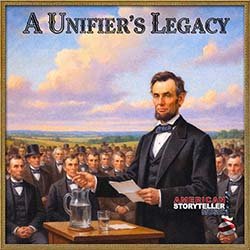
"A Unifier's Legacy©"
Lyrics by M. S. McKenzie (Unless Otherwise Noted) | Music Performed by Songs Across America or American Storyteller Music, All Songs Are Protected by Copyright
~ Associated State Links ~
State of IN Home Pg. | State of IN Gallery Pg. || State of IL Home Pg. | State of IL Gallery Pg. || State of DC Home Pg. | State of DC Gallery Pg.
"A Unifier's Legacy"
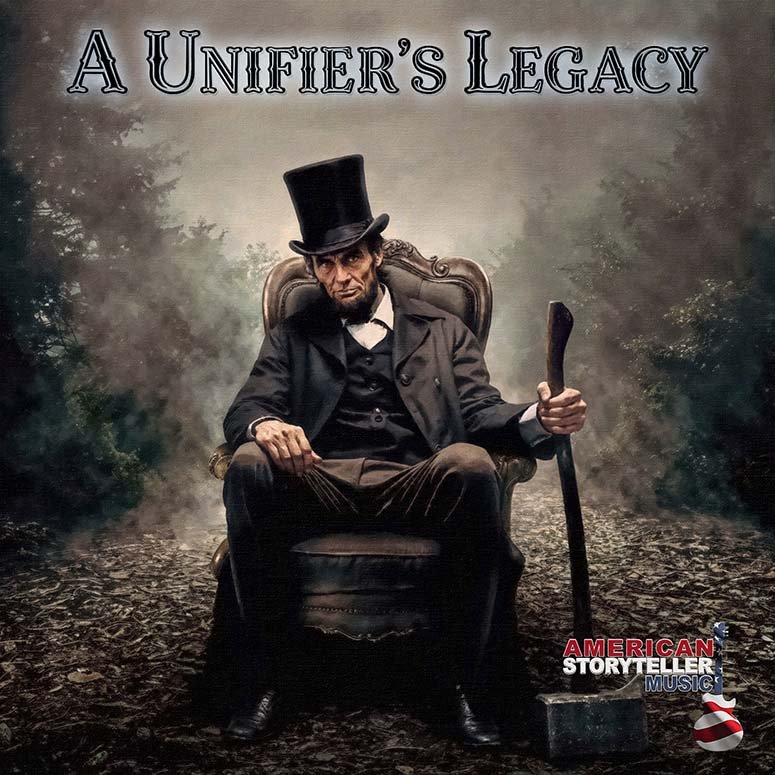
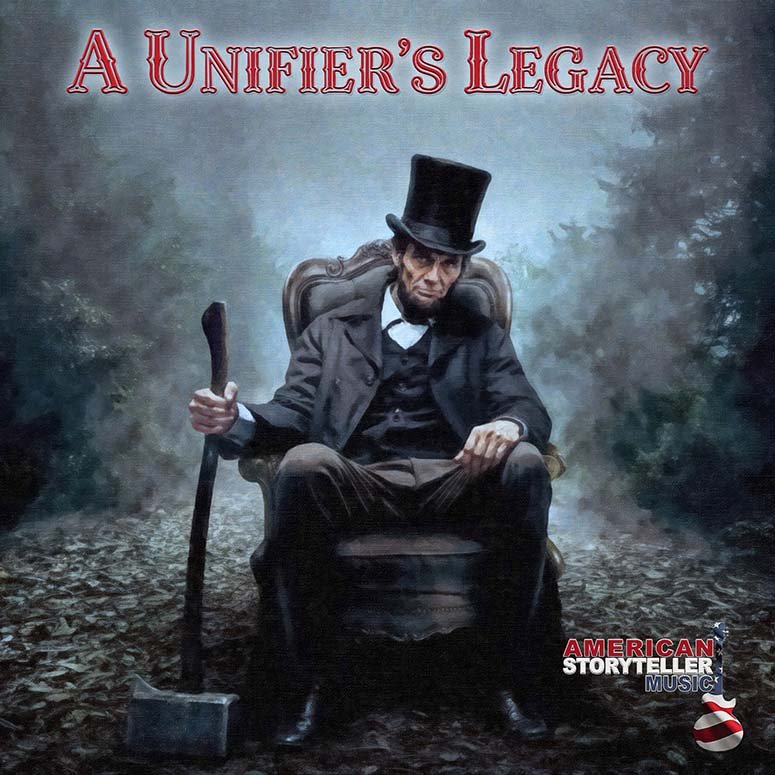
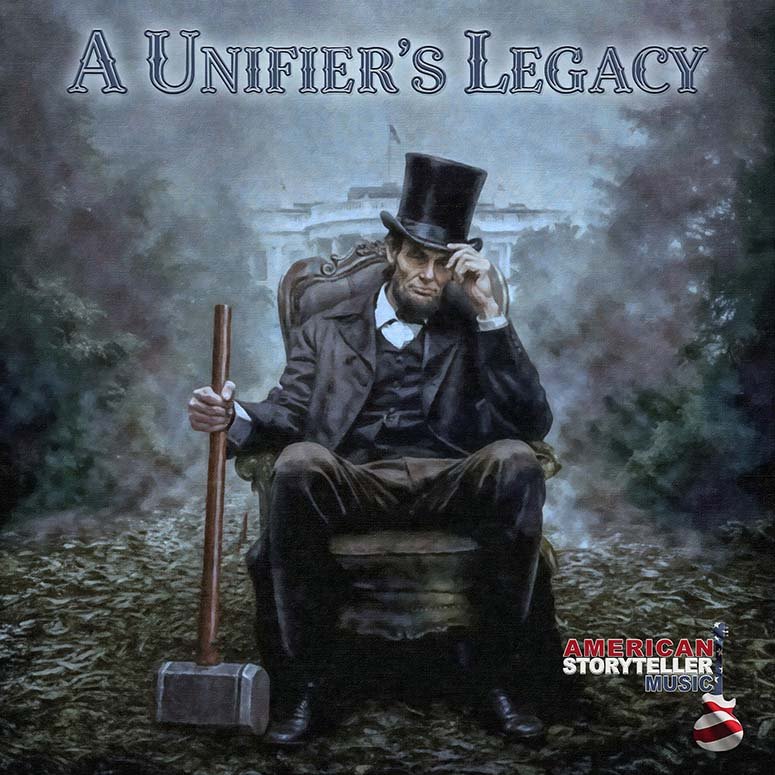
I wrote "A Unifier's Legacy" wanting to trace the whole arc of Lincoln's life rather than freeze him at any single moment, because I think the presidency and the war and the Proclamation only mean what they mean if you can also see the barefoot boy turning pages by firelight in Spencer County. He carried borrowed books like a pilgrim's sign, and aimed his hopes and dreams past the county line, and I wanted that hunger to learn, present from the very beginning, to be understood as the same instinct that eventually rewrote the country's laws.
The story behind the song is the Eighth Circuit years in Illinois, riding from Springfield through Decatur and Pontiac and Danville, arguing fair and winning the floor with nothing but plainspoken logic. I wanted that unglamorous, traveling, courthouse-door version of Lincoln to get real space in the song, because I think it's where his actual character was built, long before anyone knew it would matter on the largest possible stage.
What I care about most is the line "malice toward none," practiced now with a steadfast love, because I wanted the song to insist that his creed was never meant to stay in the past. Hold fast, America, lift your eyes and see, a house stands firm when hearts choose unity, is addressed to now as much as to 1863. Songs Across America has room for this country's hardest history, and I wanted a song that could hold Sumter's cannon, the Emancipation Proclamation, Gettysburg's cold field, and an assassin's bullet all in the same frame as the boy who once carried borrowed books, because all of that is one continuous life, not separate legends.
Sweeping historical Americana ballad built on a hymn-like, unifying chorus, structured chronologically from Lincoln's Indiana boyhood through his Illinois law career, presidency, and assassination.
Lincoln's full life arc from childhood through presidency and assassination, humble beginnings shaping enduring character, the Emancipation Proclamation and the healing of a divided nation, and a creed meant to be practiced rather than merely remembered.
Primary Subject:
Abraham Lincoln, from his boyhood in Spencer County, Indiana, through his years as a traveling lawyer in Illinois, to his presidency, the Emancipation Proclamation, and his assassination.
Mood:
Reverent and reflective throughout, deepening into solemn resolve, closing on enduring, hopeful legacy.
A single life can move from a barefoot boy borrowing books by firelight to a president rewriting a nation's laws, and the creed he left behind, malice toward none and charity for all, was never meant to stay in the past. It's a standard every generation has to keep choosing to practice.
[Intro]
A lantern's glow on a prairie night
A cabin window spilling learning light
A rail-splitter's hands, a reader's mind
A road that calls the heart to bind…
[Verse 1 – Boyhood in Indiana]
In Spencer County woods where the tall oaks sway
A barefoot boy turned pages by the firelight's play
At Little Pigeon Creek, in the Hoosier pine
Hard-scrabble days—yet a widening mind
From Gentryville fields to Rockport's shore
The Ohio River beckoned of someplace more
He carried borrowed books like a pilgrim's sign
And aimed his hopes and dreams past the county line
[Pre-Chorus]
Miles to go; truth and justice to find
Across the fields and rivers of his time
[Chorus]
Hold fast, America…lift your eyes and see
A house stands firm when hearts choose unity
Through storm and sorrow, keep the compass true
With courage for the many and mercy for the few
From that one-room cabin in old Indiana…
…down prairie roads to our nation's star above
Let Lincoln's creed—"malice toward none…"
…be practiced now with a steadfast love
[Verse 2 – The Traveling Lawyer (Illinois)]
He rode the Eighth Circuit out of Springfield town
With dust on his boots and old law books worn down
Early Decatur mornings, across Pontiac's plain
To Metamora halls in the pouring rain
Bloomington benches, and lonely Danville nights
With his plainspoken logic he set wrongs to rights
Across Illinois, by the courthouse door
He would argue fair and win the floor
[Verse 3 – The Presidency & War]
Ballots turned—and the Union shook
Sumter's cannon opened history's book
He called the nation, steady and brave
To hold the Union and its soul to save
On New Year's Day he signed Freedom's claim
A Proclamation that called out bondage by name
At Gettysburg's field, where cold winds crossed
He measured a nation's vow against lives lost
[Bridge – Reflection / Resolve]
O Potomac rolling, carry this vow
We bind up the wounds we live with now
From blue and gray to a single sky
Let the work of the living not pass by
Wherever the fragile and fearful stand
Reach out your hand—be the healing hand
[Verse 4 – Assassination & Legacy]
On an April night in Washington's light
A sudden shot cut short a unifier's fight
A hero fell, but a nation would rise instead
And follow that road where his courage led
The Thirteenth inked in our book of laws
Our Union mended to a nobler cause
From Hoosier woods to a martyr's rest
He gave this country his very best
[Chorus]
Hold fast, America…lift your eyes and see
A house stands firm when hearts choose unity
Through storm and sorrow, keep the compass true
With courage for the many and mercy for the few
From that one-room cabin in Indiana…
…down prairie roads to our nation's star above
Let Lincoln's creed—"malice toward none…"
…be practiced now with steadfast love
[Outro – Solo fiddle over guitar]
When nights grows long and those old doubts begin
Remember: we stand taller when we let each other in
From Indiana's dusty trails to that White House door
Let truth and justice be our northern star forevermore
"A Unifier's Legacy" is a sweeping historical tribute to Abraham Lincoln that follows his journey from an impoverished childhood in southern Indiana to the presidency, the Civil War, emancipation, assassination, and enduring place in the American conscience. Written with the narrative character of an Americana story-song, it presents Lincoln not merely as a distant national monument, but as a self-educated boy, a traveling lawyer, a reluctant wartime leader, and ultimately a symbol of unity, moral courage, mercy, and unfinished national responsibility.
The opening immediately establishes an intimate, almost mythic portrait of Lincoln's early life. A lantern glowing across a prairie night and learning light spilling from a cabin window suggest both physical darkness and intellectual awakening. The contrast between "a rail-splitter's hands" and "a reader's mind" captures one of the central themes of Lincoln's life: the coexistence of hard physical labor and relentless self-education. Before the song names him directly, these images identify the familiar outline of a young man whose circumstances were humble but whose thoughts were already reaching far beyond the borders of his immediate world.
The first verse concentrates on Lincoln's boyhood in Spencer County, Indiana, grounding the song in specific places such as Little Pigeon Creek, Gentryville, Rockport, and the Ohio River. These geographic references give the verse the atmosphere of a musical travelogue while emphasizing the isolation and hardship of frontier life. The barefoot boy reading by firelight becomes the emotional center of the section. His books are described as being carried "like a pilgrim's sign," suggesting that knowledge was not merely a pastime but a calling, a source of direction, and a means of spiritual and intellectual travel. The Ohio River becomes a symbol of possibility, inviting him toward a larger world while his ambitions stretch "past the county line."
The brief pre-chorus expands this personal journey into a moral one. Lincoln's miles are not only physical distances across fields and rivers, but steps in a lifelong search for truth and justice. The line prepares the listener for a chorus that moves beyond biography and speaks directly to the modern nation.
The chorus serves as the song's central statement of purpose. "Hold fast, America" is both encouragement and warning, urging the country not to surrender its democratic ideals during periods of conflict, fear, and division. The line "A house stands firm when hearts choose unity" echoes Lincoln's famous warning that a house divided against itself cannot stand, but it shifts the emphasis from political fracture to personal responsibility. Unity is presented not as something imposed by government, but as a conscious choice made by individual hearts.
The chorus balances firmness with compassion. Its appeal to keep the moral compass true "with courage for the many and mercy for the few" suggests that leadership requires both collective resolve and concern for those who are vulnerable, isolated, defeated, or unpopular. Lincoln's rise from a one-room Indiana cabin to the presidency becomes evidence that national greatness can emerge from obscurity, hardship, education, and perseverance. The reference to "malice toward none" draws from Lincoln's Second Inaugural Address and transforms his words into a present-day challenge. The song does not ask listeners simply to admire Lincoln's creed, but to practice it through steadfast love.
The second verse follows Lincoln into his years as a traveling Illinois attorney. References to Springfield, Decatur, Pontiac, Metamora, Bloomington, and Danville create the sense of constant movement along the Eighth Judicial Circuit. Dusty boots, worn law books, pouring rain, courthouse benches, and lonely nights humanize the future president and portray law as practical, demanding work conducted face-to-face in scattered communities. Rather than depicting Lincoln as polished or aristocratic, the verse emphasizes his plainspoken reasoning, persistence, and ability to make complex arguments understandable. His courtroom skill becomes part of the larger portrait of a man learning how to persuade, mediate disputes, and appeal to a shared sense of fairness.
The third verse marks the song's dramatic turning point. The election that should represent democratic continuity instead brings national rupture, and the cannon fire at Fort Sumter opens the darkest chapter of the narrative. The language becomes broader and more urgent as Lincoln is required to preserve not only the geographic Union but its moral soul. His leadership is portrayed as steady rather than triumphant, reflecting the immense uncertainty, sacrifice, and responsibility of the Civil War.
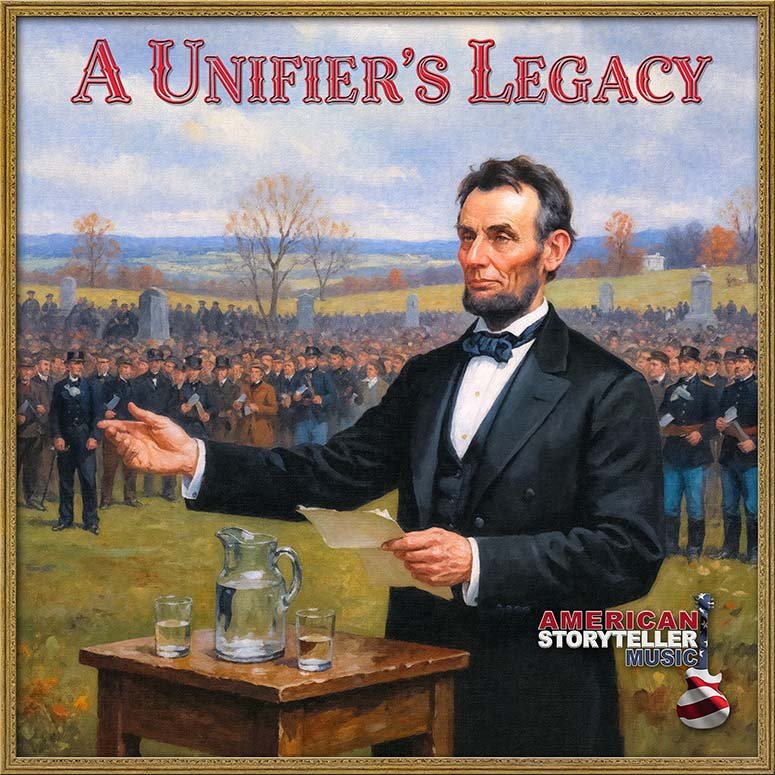
The Emancipation Proclamation is described as "Freedom's claim," a phrase that presents emancipation as both an executive act and a moral declaration against bondage. The line about calling slavery "by name" underscores the importance of directly confronting injustice rather than disguising or minimizing it. The reference to Gettysburg then deepens the cost of that struggle. Cold winds crossing the battlefield create a solemn physical atmosphere while Lincoln weighs the ideals of the nation against the lives already lost in their defense. His words at Gettysburg are therefore framed not as abstract rhetoric, but as a vow made in the presence of sacrifice.
The bridge shifts from historical narration to reflection and present-day resolve. The Potomac River becomes a witness carrying Lincoln's promise forward through time. The call to "bind up the wounds" recalls his language at the end of the war, but the wounds in this song are not limited to those of the 1860s. They include divisions, injustices, fears, and resentments that remain alive in contemporary America. The transition from "blue and gray" to "a single sky" imagines reconciliation without erasing the suffering that made reconciliation necessary.
The bridge's repeated image of the healing hand is especially important. It shifts responsibility away from celebrated leaders alone and places it upon ordinary people. Wherever someone is fragile, fearful, excluded, or uncertain, the listener is asked to respond with compassion. In this way, Lincoln's legacy becomes active rather than ceremonial. It exists whenever people choose to repair rather than deepen division.
The final verse brings the narrative to the assassination at Ford's Theatre. The sudden gunshot is described as cutting short "a unifier's fight," emphasizing that Lincoln's work of reunification was incomplete at the time of his death. The verse treats him as a fallen national hero, but it avoids allowing the story to end in despair. The country must rise and continue along the moral road he helped establish.
The reference to the Thirteenth Amendment places Lincoln's legacy within the nation's legal foundation. The amendment is imagined as ink permanently entered into America's book of laws, ending the constitutional protection of slavery and committing the reunited nation to a "nobler cause." The song acknowledges that the Union was preserved, but also suggests that simple preservation was not sufficient. The restored nation needed a higher moral purpose rooted in liberty and human dignity.
By tracing Lincoln's life "from Hoosier woods to a martyr's rest," the verse completes the geographical, historical, and emotional arc that began in the cabin. His journey moves from obscurity to national leadership and from mortal life into collective memory. The statement that he "gave this country his very best" is intentionally simple and heartfelt, reflecting the plainspoken style associated with Lincoln himself.
The returning chorus takes on greater emotional weight after the listener has followed the war, emancipation, Gettysburg, and assassination. Its appeal for unity no longer sounds idealistic or effortless. Unity is shown to require sacrifice, courage, mercy, endurance, and an honest confrontation with injustice. "Malice toward none" becomes not a passive request to avoid anger, but an active discipline of reconciliation.
The outro closes quietly with solo fiddle and guitar, returning the song to the intimate Americana atmosphere of its beginning. The arrangement suggests that after the grandeur of history and the tragedy of war, Lincoln's lesson can still be carried through a simple melody and a personal act of remembrance. The warning about nights growing long refers not only to literal darkness, but to periods when national confidence weakens and old doubts return.
The final lines summarize the song's central philosophy: the country becomes stronger when people allow one another to belong. The journey from Indiana's dusty trails to the White House becomes a metaphor for the American promise, while truth and justice are described as a northern star capable of guiding the nation through moral darkness. The navigational imagery connects with the earlier compass reference, giving the song a consistent symbolic framework of roads, rivers, direction, and purposeful travel.
Musically, "A Unifier's Legacy" is well suited to an expansive Americana, folk-rock, or cinematic country arrangement. Acoustic guitar, fiddle, restrained percussion, warm piano, cello, and subtle orchestral strings could support its movement from frontier intimacy to wartime gravity. The first verse could remain sparse and reflective, while the chorus gradually widens with fuller harmonies and a stronger rhythmic foundation. The Civil War verse would benefit from low drums and solemn strings, followed by a more intimate bridge and a final chorus that feels emotionally elevated without becoming overly triumphant. The solo fiddle outro provides an appropriate sense of memory, mourning, and continuation.
Ultimately, "A Unifier's Legacy" is not simply a chronological account of Abraham Lincoln's life. It is a meditation on what his example asks of later generations. The song honors his intelligence, humility, perseverance, political courage, opposition to slavery, compassion after war, and belief in the survival of democratic government. At the same time, it recognizes that unity without justice is fragile and that national healing requires sustained effort. Lincoln's legacy is therefore presented not as a completed achievement of the past, but as a moral road America must repeatedly choose to follow.



.jpg)








.jpg)
