"Monuments Rise©"
Lyrics by M. S. McKenzie (Unless Otherwise Noted) | Music Performed by Songs Across America or American Storyteller Music, All Songs Are Protected by Copyright
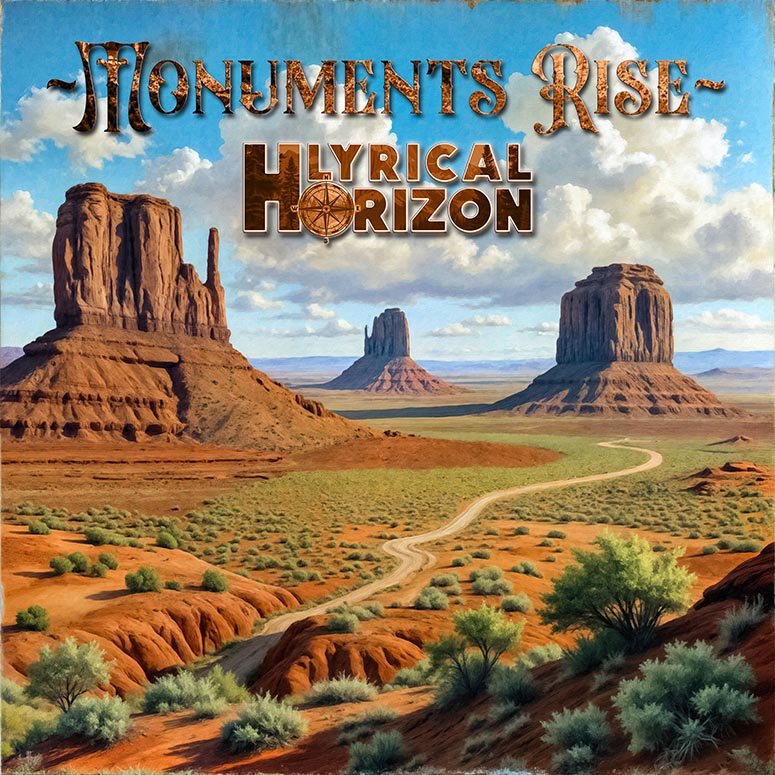
~ Associated Arizona and New Mexico State Links ~
"Monuments Rise"
I wrote "Monuments Rise" because Monument Valley has been photographed and filmed so many times that it risks becoming wallpaper, a backdrop directors reach for whenever they need something that looks like the American West. I wanted a song that took the valley back from that reputation and returned it to what it actually is, which is older and stranger and far more sacred than any movie frame has ever managed to capture. The Twin Mittens do not exist to look good in a shot. They have been standing there since long before anyone thought to point a camera at them.
The story behind the song is the bridge, where directors come seeking Hollywood thrills down that asphalt ribbon of iconic stills, but deeper truths lie waiting here. I placed that verse deliberately in the middle of the song, surrounded on both sides by weather and starlight and coyote cries, because I wanted the tourism and the film industry to look small next to the actual scale of the place. The valley does not perform for the cameras. It was carved by invisible hands over spans of time no film shoot could ever represent, and the generations who walked this ground before the highway existed are still the truer measure of what this place means.
I built the song to move through an entire day on purpose, from stillness into a violent summer storm and out again into starlight, because I wanted the valley to feel less like a postcard and more like a living system with its own weather and its own patience. The thunder against the canyon walls, the rain as a blessing rather than an inconvenience, the final coyote's cry beneath the big desert sky, all of it is meant to argue that this land is not scenery waiting to be looked at. It is a place that continues whether or not anyone is watching, ancient and self-sufficient, indifferent to the highway running past it. Songs Across America keeps returning to that idea, that the country's iconic places are usually far deeper than their own fame, and Monument Valley might be the clearest example of a landscape that has been seen a thousand times and truly known by almost no one.
Sweeping cinematic Americana with a stripped-back opening that builds through orchestral layering into a climactic, storm-driven final chorus. Layered harmonies and building intensity trace the arc of a full day, from stillness through thunder into starlit stillness again, using sound effects (thunder, rain) to place the listener directly in the valley.
The reclaiming of an iconic landscape from its own fame, ancient geologic and cultural time, the desert as a living and weathered presence, reverence for what came before tourism, and the smallness of human spectacle against natural permanence.
Primary Subject:
Monument Valley itself, from the Twin Mittens through Totem Pole and Merrick Butte to the desert storms and starlit nights that pass over it, largely unwitnessed by the highway of tourists running past.
Mood:
Reverent, majestic, and mysterious. Still and solemn at the opening, rising through dramatic intensity during the storm, and settling into hushed, ancient calm under the stars.
Places made famous by film and photography are often far deeper and older than their fame suggests. Monument Valley was not built to be looked at. It has stood for generations before any camera arrived, and its true meaning lies in its ancient scale, its weather, and its silence, not in its reputation as scenery.
[Verse 1: Stripped Back]
Twin Mittens rise up from the desert floor
Still casting shadows as in years before
When the Navajo first walked these lands
Through towers carved by invisible hands
Silent guardians in the shimmering heat
Where earth and endless heavens meet
[Chorus: Layered Vocals, Harmonies]
This Great Valley where coyotes roam
And ancient spirits are frozen in stone
Where Monuments rise high in the air
Reflecting sunset colors with flare
Time flows slower over these desert sands
Weaving through stark and mysterious lands
[Verse 2: Orchestral Build]
Tower-like Totem Pole and Merrick Butte
Stand watch where ancient trails run mute
Wind-carved faces stare back from the stones
Giving one the feeling that you're not alone
While lonely highways stretch out for miles
Through red-rock canyons shaped into aisles
[Bridge: Building Intensity]
Directors come seeking Hollywood thrills
Down that asphalt ribbon of iconic stills
But deeper truths lie waiting here
In silence that draws wanderers near
Where generations walked before
On this parched, ancestral desert floor
[Verse 3: Climactic] [Sound Effects: Thunder]
Rain clouds gather on the distant horizon
Lightning, thunder, rain and hailstone
Thunder echoes against the canyon walls
The desert comes to life as the rain falls
Each drop a precious blessing from the sky
As notes of petrichor begs your spirit to fly
[Verse 4]
Then stars appear as the day grows dim
Final rays from Sol paints the canyon rim
The desert winds speak of ancient lore
Through ancient halls that time ignored
While a distant coyote's lonesome cry
Echoes beneath the big desert sky
[Final Chorus: Layered Arrangement, Building Intensity]
This Great Valley where coyotes roam
And ancient spirits are frozen in stone
Where Monuments rise high in the air
Reflecting sunset colors with flare
Time flows slower over these desert sands
Weaving through stark and mysterious lands
This Great Valley where coyotes roam
And ancient spirits are frozen in stone
Where Monuments rise high in the air
Reflecting sunset colors with flare
Time flows slower over these desert sands
Weaving through stark and mysterious lands
[Outro: Instrumental]
[Fade Out]
"Monuments Rise" is a sweeping, cinematic tribute to Monument Valley and the immense natural forms that define its desert horizon. The song presents the valley not simply as a collection of famous rock formations, but as an ancient and almost timeless world where geology, cultural memory, weather, wildlife, and human imagination come together. Through a gradual musical build, the lyrics carry the listener from the stillness of early desert light into a violent summer storm, then onward into sunset, starlight, and the lonely cry of a distant coyote.
The stripped-back opening verse creates an immediate sense of space and solitude. The Twin Mittens rise from the desert floor like enormous natural landmarks, casting shadows much as they have for generations. Their presence connects the modern observer with those who walked the land long before highways, tourism, and film crews arrived. The description of towers "carved by invisible hands" suggests the slow forces of wind, water, and erosion, but it also gives the landscape a mysterious, almost sacred quality. These formations become "silent guardians," standing between the earth and the vast desert sky.
The chorus expands the song into a broader portrait of the valley. Coyotes roam beneath stone monuments that appear to preserve ancient spirits within their walls. Time seems to move more slowly across the open desert, where distances are immense and the land carries the visible marks of countless ages. Sunset colors move across the cliffs and buttes, changing the stone from red and orange to purple, gold, and shadow. The repeated phrase "where Monuments rise" becomes both the song's central image and its emotional anchor, celebrating the grandeur of a place that feels larger than ordinary human experience.
As the arrangement begins to grow, the second verse introduces several of the valley's most recognizable formations. Totem Pole and Merrick Butte stand like watchtowers over trails that have grown quiet with time. The wind-carved shapes within the stone appear almost human, as though faces are looking back at the traveler. This creates the feeling that the landscape is inhabited by memory, presence, and stories that cannot be fully explained. Even in apparent isolation, the visitor does not feel entirely alone.
The lonely highways and red-rock canyons add another layer to the song's visual character. The road moves through the valley almost like an aisle through a vast natural cathedral. This comparison reinforces the reverence found throughout the lyrics. Monument Valley becomes a place where the scale of the landscape encourages silence, humility, and reflection. The traveler is not merely passing through scenery, but entering a space shaped by deep time and ancestral experience.
The bridge acknowledges Monument Valley's powerful connection to Hollywood. Its broad roads, towering buttes, and dramatic horizons have helped define the visual language of the American West. Directors arrive in search of iconic images, adventure, and spectacle, but the song insists that there is something far deeper beneath those familiar cinematic views. Beyond the photographs and movie scenes lies an ancestral landscape carrying generations of history. The valley cannot be understood solely as a backdrop. Its meaning comes from the people, memories, and traditions connected to the land.
The third verse provides the song's dramatic climax. Thunderclouds gather along the horizon as lightning and thunder break the desert stillness. The arrangement's growing intensity mirrors the arrival of the storm, while the sound of thunder transforms the valley into a vast natural amphitheater. Rain and hail strike the dry ground, awakening the desert and briefly changing its character. The formations that seemed motionless and silent now echo with sound and movement.
Rain is portrayed as a precious blessing rather than an inconvenience. In such an arid environment, every drop carries importance. The scent of petrichor rises from the earth, filling the air with the unmistakable fragrance of rain meeting dry stone and dust. That scent becomes emotionally liberating, calling the spirit outward and upward. The desert is no longer simply being observed. It is being experienced through sight, sound, smell, and atmosphere.
The fourth verse allows the intensity to subside. As the storm passes and the day begins to fade, stars emerge above the valley. The final rays of the sun paint the canyon rims while the desert wind seems to carry fragments of ancient stories through natural halls untouched by time. The appearance of "Sol" gives the setting sun a mythic presence, as though the day itself is performing one final act before darkness settles across the land.
The coyote's cry completes the scene. Its lonely voice travels beneath the immense night sky, linking the song's ending back to the animals mentioned in the chorus. The sound is haunting, but not empty. It becomes part of the valley's continuing rhythm, a reminder that life remains present even after the light has disappeared.
Musically, "Monuments Rise" is designed to grow alongside its subject. The restrained opening reflects the stillness of the desert, while layered harmonies and orchestral elements gradually widen the sonic landscape. The bridge increases the tension, the storm sequence provides the climactic release, and the repeated final chorus gives the song an expansive, almost anthem-like conclusion. The instrumental fade suggests that the valley continues beyond the boundaries of the song, enduring long after the final notes disappear.
At its heart, "Monuments Rise" is a song about permanence, perspective, and reverence. It recognizes the familiar beauty of Monument Valley while looking beyond its cinematic reputation to the deeper cultural and spiritual meaning held within the land. The monuments rise not only as geological wonders, but as witnesses to human history, natural change, and the enduring mystery of the American desert.








.jpg)
